Flora
The native temperate forests of Chile are a global pool of biodiversity, have an extremely rich endemic biota, especially monospecific genera and families.
The current distribution patterns of Chilean forests has its origen in the last glaciation, which occurred about 12,000 years ago, when much of the territory was covered by ice.
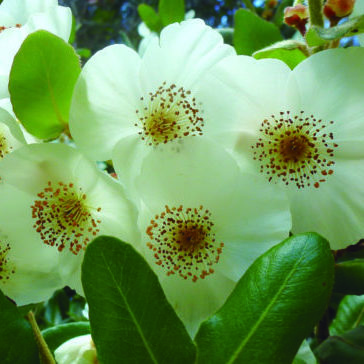
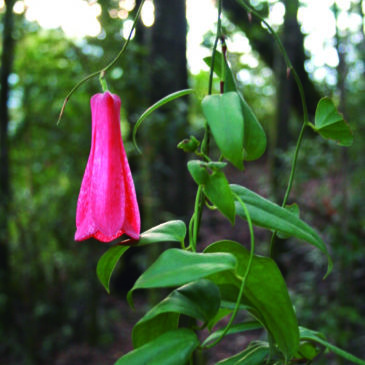
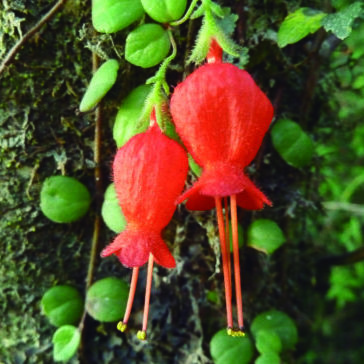
The flora of the reserve is dominated by Valdivian Rainforest, moist mixed forest has a huge variety of species, is covered by 84% by forests of varied composition, which is dominated by evergreen trees and Coigue (Nothofagus dombeyi) with a height that exceeds 25 m, Ulmo (Eucriphya cordifolia), Tepa (Laurelia philippiana) and Laurel (Laurelia sempervirens), Olivillo (Aextoxicon punctatum) Lingue (Persea lingue), Tineo (Weinmannia trichosperma) , Avellano (Gevuina avellana), Canelo (Drimys winteri) notro (Embothrium coccineum). It also contains conifers such as Mañío (Saxegothaea conspicuous) and Mañío Macho (Podocarpus nubigena). In some sectors are deciduous trees such as Roble (Nothofagus obliqua), Nirre (Nothofagus antarctica), Lenga (Nothofagus pumilio) and Raulí (Nothofagus alpina), a specie which is very little represented in protected areas in Chile.
The Huilo Huilo forest is characterized by high species richness of ferns, fungi, bryophytes (mosses and liverworts) and lichens, which form an important part of the forest floor and also grown on the trunks of old trees and those which has been fallen.
Ferns
Ferns are fascinating plants. After lichens, liverworts and mosses these were the first land plants and colonized the entire planet. Huge shaded ferns, under which grew smaller. Many species of ferns could not resist the competition from more modern facilities and became extincted, others survived by adapting to new conditions.
The first land plants appeared 480 million years ago during the Ordovician period (Paleozoic era) from freshwater green algae. Ferns are the first vascular plants appeared about 360 million years ago during the Carboniferous Period (Paleozoic Era). Much later came the gymnosperms, conifers being the most representative, only later on flowering plants had been developed, dicots and monocots. Today there are 20,000 species around the world except Antarctica.
So, the ferns are ancient relics of the past, true living fossil. The diversity of ferns in Huilo Huilo is one of the largest in continental Chile.
Our Foundation worked out a "Guide of Ferns in the temperate rain forest" showing illustrations of 38 species.
Lichens
Lichens of these forests are of great importance in the cycling of minerals, are especially abundant and conspicuous, calling the temperate rainforest of Chile as one of the main centers of biodiversity of lichens in the world. However, due to its high sensitivity, these plants has been strongly affected by forest degradation, deforestation and the use of herbicides.
Bryophytes
Bryophytes are part of an ancient group of plants, which are characterized by their small size and particular life cycle. Bryophytes are green and autotrophic plants, its cells produce starch. These organisms are non-vascular and without tissue drivers (xylem and phloem). Three classes in this group of plants: liverworts, mosses and Antocerotes.
Mushrooms
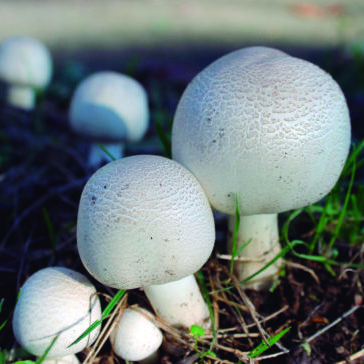
Mushrooms are neither plants nor animals, they belong to a different realm: the Kingdom Fungus. Unlike plants, which feed through photosynthesis and animals by ingestion, fungi feed by absorption.
They are fundamental in the cycle of degradation of organic matter. They are found in all ecosystems, forests, soil and air, should be preferentially in damp and dark as they do not need light to survive and tehy exist in all sizes ranging from microscopic. The common feature is that the fungi have no chlorophyll.